
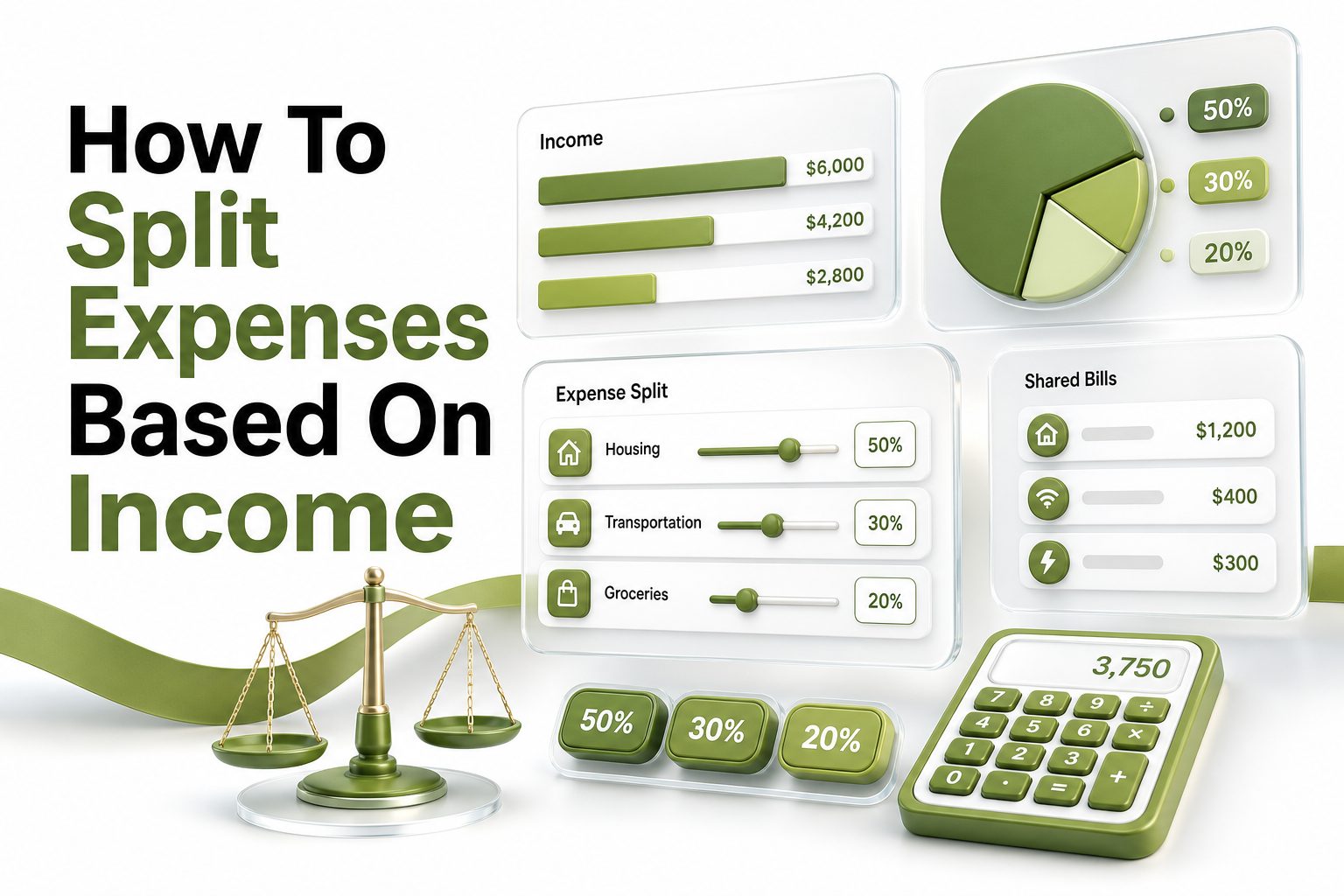
Splitting shared costs can feel simple at first, but income differences often make equal payments unfair. When one person earns much more, a 50/50 split may create pressure for the lower earner and resentment over time.
A fair income-based system gives each person a share that matches their financial capacity. It helps couples, roommates, and family members handle rent, groceries, utilities, and savings goals without making money feel like a constant argument.
The goal is not to track every dollar with stress. The goal is to create a clear, repeatable method that feels balanced, protects each person’s budget, and supports shared responsibilities in a practical way.
Why Income-Based Splitting Works
An income-based split recognizes that people can contribute differently while still being equally committed. If one person earns $7,000 monthly and another earns $3,000, equal bills leave very different amounts for savings, debt, and personal needs.
This method works especially well when shared expenses are large, such as rent, mortgage payments, insurance, childcare, groceries, or travel. It keeps the household standard of living from being set only by the higher earner’s comfort level.
Fairness does not always mean identical payments. In many households, fairness means each person carries a similar level of financial effort relative to income, while both still participate in planning and decision-making.
Simple Income-Based Formula
Add both monthly net incomes together first. Net income means the money received after taxes and regular paycheck deductions. Using take-home pay makes the calculation more realistic because it reflects the money each person can actually spend.
Next, divide each person’s income by the total household income. The result is each person’s percentage share. Apply that percentage to shared expenses, including rent, utilities, groceries, subscriptions, insurance, or any agreed household costs.
For example, if one person earns $4,000 and another earns $2,000, total income is $6,000. The first person earns 66.7 percent of the income, and the second earns 33.3 percent, so shared bills follow that same split.
Quick Split Example
Monthly take-home income:
Person A: $4,000
Person B: $2,000
Total household income: $6,000
Income shares:
Person A: 66.7 percent
Person B: 33.3 percent
Monthly shared expenses:
Rent: $1,800
Utilities: $250
Groceries: $600
Internet and subscriptions: $150
Total shared expenses: $2,800
Payment shares:
Person A pays about $1,868
Person B pays about $932
This keeps the split connected to earning power instead of forcing both people into the same dollar contribution.
Choosing Which Expenses to Share
Before using any formula, decide what counts as a shared expense. Common shared costs include housing, utilities, groceries, household supplies, internet, streaming services, childcare, pet care, and joint transportation costs.
Personal costs should usually stay separate unless both people agree otherwise. Personal debt, individual hobbies, private subscriptions, gifts, clothing, and solo travel may belong in separate budgets to preserve independence and reduce conflict.
Some expenses sit in the middle. A car used by both people, a gym membership used together, or family phone plans may need discussion. The rule should be simple: if both people benefit from it regularly, it may belong in the shared budget.
Using Net Income Instead of Gross Income
Net income is usually better than gross income because it reflects real spending power. Gross income can look strong on paper, but taxes, health insurance, retirement contributions, and required deductions reduce available cash.
Using net income also avoids confusion when two people have different job structures. One person may have high payroll deductions, while another pays for benefits separately. Take-home pay creates a cleaner basis for comparison.
If one person has irregular income, use an average from the last three to six months. Freelancers, commission workers, and business owners may need a rolling average so the split stays fair without changing every week.
Income-Based Split for Couples
Couples often use income-based splitting because shared life decisions affect both people. Rent location, childcare, vacations, and lifestyle choices can create pressure if one partner’s income is much higher.
This method allows both partners to enjoy shared living standards without requiring the lower earner to sacrifice savings or basic comfort. It can also reduce the emotional strain that comes from constantly negotiating individual bills.
Couples should still keep space for personal money. A shared system works best when household costs are clear, but each partner has some private spending money that does not require approval or explanation.
Income-Based Split for Roommates
Roommates can also split expenses by income, but the arrangement needs extra clarity. Unlike couples, roommates may not share long-term financial goals, so the agreement should be practical, documented, and easy to maintain.
Rent is often the biggest issue. If bedrooms are different sizes or one person has a private bathroom, rent may need a hybrid method using room value and income share together. Equal rent is not always fair.
For roommates, shared groceries can get complicated. Many prefer splitting utilities by income while keeping food separate. This avoids tension when eating habits, diets, schedules, or guest visits differ from one person to another.
Hybrid Methods That Feel Fair
A pure income-based split is not the only option. Some households prefer a hybrid system where fixed necessities are split by income, while optional extras are divided equally or paid by the person who wants them most.
For example, rent and utilities may follow income percentages, while restaurant meals, entertainment, or travel upgrades are handled separately. This gives fairness on essential costs without turning every personal preference into a shared obligation.
Another option is setting a shared monthly contribution from each person based on income. The household account pays agreed bills, while anything outside that list remains personal. This keeps the system clean and easier to track.
Helpful Budget Categories
Essential shared costs:
Rent or mortgage
Electricity, gas, and water
Internet
Groceries and household basics
Childcare or pet care
Insurance linked to the household
Flexible shared costs:
Streaming services
Dining out together
Travel
Home decor
Events and entertainment
Gifts for shared family occasions
Personal costs:
Individual debt
Personal hobbies
Solo subscriptions
Clothing
Personal care
Private savings goals
These categories prevent confusion and help both people see which costs belong in the shared system.
Setting a Shared Household Account
A shared account can make income-based splitting easier. Each person transfers their calculated amount at the start of the month, and shared bills are paid from that account automatically.
This reduces the need for constant reimbursement. Instead of one person covering bills and asking for repayment, both contribute ahead of time. It also creates a clear record of shared spending.
The account should have agreed rules. Decide which bills can be paid from it, how much buffer to keep, and when to review contributions. Clear rules keep the account useful instead of turning it into another source of tension.
Handling Income Changes
Income changes happen. Raises, job loss, reduced hours, bonuses, parental leave, career shifts, and new businesses can all affect a fair split. A good system should be flexible enough to adjust without drama.
Set a regular review schedule, such as every three months or twice a year. This prevents money talks from happening only during stressful moments. It also gives both people a normal time to update numbers.
Temporary changes may need temporary agreements. If one person loses a job, the other may cover more for a short period. The key is naming the timeline, expectations, and review date so support feels clear.
Avoiding Common Mistakes
One common mistake is using income-based splitting but allowing the higher earner to control every decision. Paying more does not automatically mean having more authority over household choices.
Another mistake is ignoring debt and required obligations. Income matters, but student loans, child support, medical bills, or family responsibilities can affect what someone can realistically contribute each month.
A third mistake is never reviewing the split. A system that felt fair two years ago may become outdated after raises, rent increases, or life changes. Fairness needs occasional maintenance, not constant debate.
Communication Rules That Help
Start the conversation with numbers, not blame. Bring income, shared bills, savings needs, and debt obligations into one clear view. This makes the discussion practical instead of emotional from the first sentence.
Use calm language around fairness. Instead of saying someone is paying too little, focus on whether the current split leaves both people with reasonable breathing room after shared expenses are covered.
Write the agreement down. It does not need to be legal or formal, but a written note prevents memory gaps. Include expense categories, percentages, payment dates, review timing, and how new bills will be added.
When Equal Splitting Still Makes Sense
A 50/50 split can work when incomes are similar and both people are comfortable with the shared lifestyle. If both earn close amounts and have similar obligations, equal payments may be simple and fair enough.
Equal splitting may also make sense for small shared expenses. If two friends share one streaming service or split a short trip, proportional calculations may feel unnecessary and overly detailed.
The issue arises when equal splitting forces one person into financial stress. If equal payments leave one person unable to save, repay debt, or cover basics, income-based splitting becomes a better fit.
Using Percentages for Savings Goals
Income-based contributions can apply to shared savings goals too. Couples may use the same percentage method for emergency funds, home deposits, wedding savings, vacations, or future childcare costs.
This method helps both people participate in goals without requiring identical dollar amounts. The lower earner still contributes, while the higher earner supports the goal in proportion to their income.
Shared savings should have a purpose and a target. Name the goal, monthly contribution, timeline, and account location. This keeps savings from feeling vague and helps both people track progress together.
Internal Resources for Better Budgeting
For a deeper monthly planning system, read household budget planner on your site and connect it with your income-based split. A clear budget makes shared contributions easier to calculate and easier to maintain.
You can also link to expense tracking spreadsheet if your site offers one. Tracking recurring bills, due dates, and categories helps prevent missed payments and keeps both people aligned on shared costs.
Internal links should feel useful, not forced. Place them where readers naturally need the next step, such as budgeting, bill tracking, savings planning, or managing household money conversations.
Sample Monthly Agreement
A simple written agreement can prevent confusion. It should list each person’s monthly net income, the total shared income, each person’s percentage, and the shared expense categories included in the arrangement.
The agreement should also name the payment date. For example, both people may transfer their share to the shared account on the first day of each month, before rent and bills are due.
Add a review date to the agreement. A quarterly review works well for many households. It gives both people a set time to update income, review bills, remove old expenses, and add new shared costs.
Sample Agreement Lines
Shared expenses include rent, utilities, internet, groceries, household supplies, and pet food.
Personal expenses include individual debt, personal subscriptions, clothing, hobbies, and solo meals.
Person A pays 60 percent of shared expenses.
Person B pays 40 percent of shared expenses.
Both contributions are transferred by the first day of each month.
The split will be reviewed every three months.
Any new recurring shared expense must be discussed before being added.
This structure keeps the agreement clear without making it too formal or difficult to follow.
Managing Lifestyle Differences
Income-based splitting works best when lifestyle choices are realistic for both people. If the higher earner wants a more expensive apartment, premium groceries, or frequent travel, the lower earner should not be pressured into unaffordable standards.
The household budget should be based on a level both people can support. Even with proportional payments, a high-cost lifestyle may still leave the lower earner with too little money for personal stability.
When preferences differ, separate optional upgrades. The person who wants the extra cost can pay the difference, or both can agree on a lower-cost version that fits the shared budget comfortably.
Protecting Financial Independence
Fair expense splitting should not erase personal autonomy. Each person needs room for personal spending, savings, debt repayment, and long-term goals outside the shared household budget.
This matters in couples and roommate situations. A system that absorbs every dollar into shared costs can create dependence, frustration, or quiet resentment. Personal money helps preserve confidence and dignity.
A useful rule is to review what remains after shared bills. If one person consistently has no room for savings or personal basics, the split or lifestyle level needs another look.
Conclusion
Learning how to split expenses based on income helps households create a fairer way to manage shared costs. The method works by comparing each person’s take-home pay, calculating income percentages, and applying those percentages to agreed shared expenses.
The best system is simple, written, and reviewed regularly. It should separate shared costs from personal spending, account for income changes, and give both people a voice in financial decisions.
Fair splitting is not about perfect math. It is about building a household money system that feels balanced, practical, and respectful for everyone involved.
FAQ
How do you calculate an income-based expense split?
Add both monthly take-home incomes together, then divide each person’s income by the total. That gives each person’s percentage share. Apply those percentages to shared bills like rent, utilities, groceries, and household services.
Should rent be split based on income?
Rent can be split based on income when earnings are noticeably different. This helps prevent one person from being overburdened. If rooms or private amenities differ, combine income share with room value for a fairer result.
Is a 50/50 split fair in a relationship?
A 50/50 split can be fair when both people earn similar incomes and have similar obligations. When income gaps are large, equal payments may create financial pressure for one partner, making a proportional split more balanced.
Should personal debt affect shared expenses?
Personal debt does not always change shared bills, but it should be part of the conversation. Student loans, medical debt, or child support can affect available cash, so a fair agreement may need some flexibility.
How often should couples review shared expenses?
Couples should review shared expenses every three to six months, or sooner after major income changes. Regular reviews keep the system current and reduce stress when rent, bills, income, or household goals change.
0 Comments